
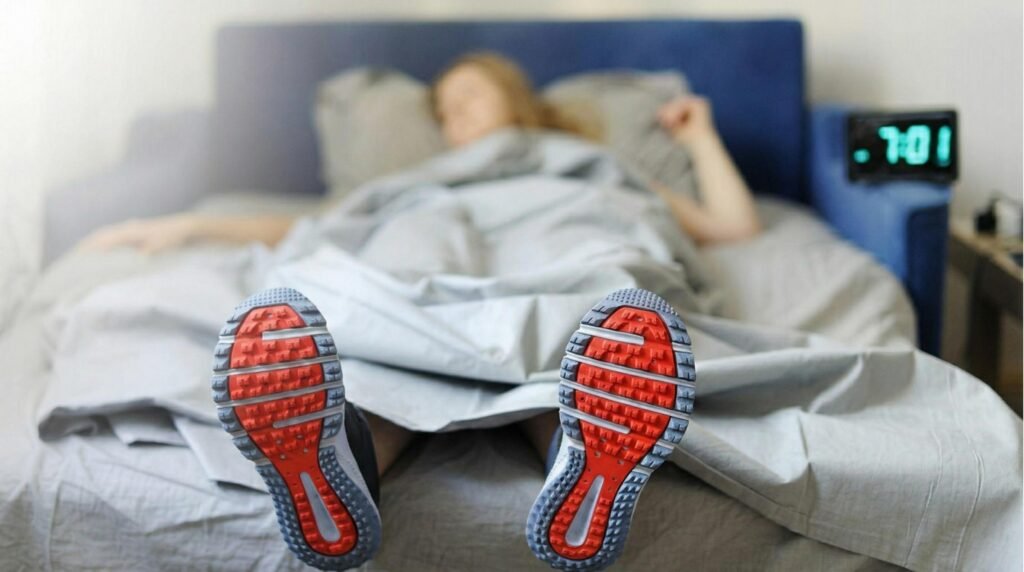
Introduction: The Hidden Variable in Your Fitness Equation
You’ve optimized your protein intake, perfected your training split, and tracked every macro. But if you’re not prioritizing sleep, you’re leaving significant gains on the table, literally. While the fitness industry obsesses over supplements, training protocols, and nutrition timing, sleep and muscle recovery remain the most powerful yet underutilized combination for maximizing growth.
Recent research has revealed that sleep isn’t merely passive rest; it’s an active physiological state where critical muscle-building processes occur. A groundbreaking 2021 study published in Physiological Reports demonstrated that just one night of total sleep deprivation [Systematic review on sleep and athletic performance] reduced muscle protein synthesis by 18% [According to research published in Physiological Reports] in healthy young adults. This isn’t just about feeling tired; it’s about your body’s fundamental ability to build and repair muscle tissue.
In this comprehensive guide, we’ll explore the intricate relationship between sleep and muscle recovery, examining the hormonal cascades, cellular repair mechanisms, and practical strategies you can implement tonight to accelerate your gains.
Upgrade Your Recovery Tonight: Don’t let poor sleep sabotage your gains. Discover premium sleep optimization tools designed for athletes, from blue light blocking glasses to temperature-regulating mattress toppers. Transform your bedroom into a muscle-building sanctuary.
👉 Explore Sleep Essentials on Amazon
The Science of Sleep Architecture: Where Recovery Happens
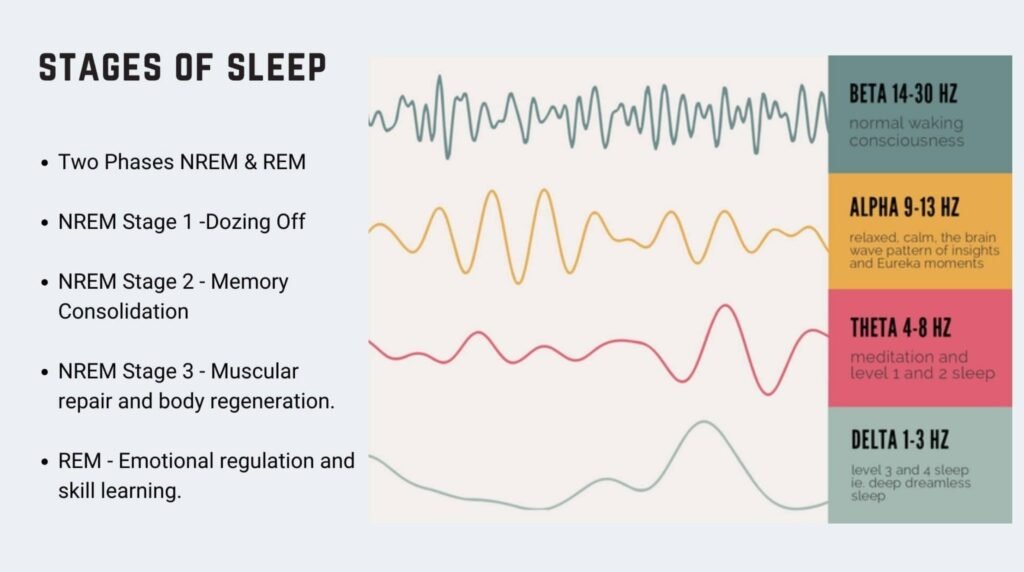
Image: Understanding sleep stages is crucial for optimizing muscle recovery
Understanding Sleep Cycles
Sleep isn’t a monolithic state but rather a complex cycle of distinct stages, each playing a unique role in recovery:
Stage 1 & 2 (Light Sleep): These transitional stages prepare your body for deeper restoration. Your heart rate decreases, body temperature drops, and muscles begin to relax. While not the primary recovery phase, these stages facilitate the transition into critical deep sleep periods .
Stage 3 (Deep/Slow-Wave Sleep): This is the muscle-building goldmine. During slow-wave sleep (SWS), your pituitary gland releases pulses of human growth hormone (HGH), essential for tissue repair [NIH research on growth hormone and sleep], muscle growth, and bone strengthening. Blood flow to muscles increases dramatically, delivering oxygen and nutrients while flushing metabolic waste products like lactic acid.
REM Sleep: While primarily associated with cognitive functions and memory consolidation, REM sleep indirectly supports physical recovery by maintaining motivation, coordination, and mental sharpness—critical factors for training consistency and performance .
The Hormonal Orchestra of Nighttime Recovery
During deep sleep, your body orchestrates a powerful anabolic hormonal environment:
Growth Hormone Surge: Up to 70% of your daily growth hormone release occurs during deep sleep. This hormone stimulates muscle protein synthesis, promotes fat metabolism, and enhances tissue regeneration . Without adequate deep sleep, you’re essentially training without this anabolic advantage.
Testosterone Production: Sleep quality directly impacts testosterone levels. Research shows that sleep deprivation can decrease plasma testosterone by up to 24%, creating a catabolic (muscle-breakdown) environment . Testosterone binds to androgen receptors in muscle tissue, activating the mTOR pathway—the master regulator of muscle protein synthesis [mTOR signaling pathway in muscle hypertrophy].
Cortisol Regulation: Poor sleep elevates cortisol, the stress hormone that promotes muscle protein breakdown. Studies indicate that sleep deprivation increases plasma cortisol by 21%, shifting your body toward catabolism rather than anabolism .
The Research: Sleep Deprivation’s Devastating Impact on Muscle
Image: Research shows sleep restriction significantly impairs muscle protein synthesis
The 18% Reduction Finding
The 2021 study by Lamon et al. provided concrete evidence [full study on sleep deprivation and muscle protein synthesis] of sleep’s impact on muscle building. Researchers found that acute sleep deprivation reduced postprandial muscle protein fractional synthesis rate (FSR) by 18% compared to normal sleep conditions . This means that even with adequate protein intake, your muscles become “anabolically resistant”, unable to effectively utilize nutrients for repair and growth.
Chronic Sleep Restriction Effects
While one night of lost sleep is bad, chronic sleep restriction compounds the damage. A 2020 study in The Journal of Physiology revealed that five consecutive nights of sleep restriction (4 hours per night) reduced myofibrillar protein synthesis in healthy young men . The researchers concluded that chronic sleep loss acts as a “potent catabolic stressor [research on sleep restriction and metabolic dysfunction],” increasing the risk of metabolic dysfunction and loss of muscle mass.
The Circadian-Muscle Connection
Emerging research on circadian rhythms reveals that muscle protein synthesis follows a daily pattern [BioEssays review on circadian rhythms and muscle]. A 2024 study published in BioEssays demonstrated that muscle protein synthesis is significantly higher during the day (light phase) compared to night, regulated by both physical activity and the circadian clock . This suggests that not only sleep duration but also sleep timing relative to your training schedule matters for optimal recovery.
The circadian clock in skeletal muscle influences:
- mTORC1 signaling: The key pathway driving muscle protein synthesis shows greater responsiveness to exercise stimuli during specific times of day
- Satellite cell activation: Muscle stem cells responsible for repair and growth are regulated by circadian rhythms
- Metabolic flexibility: Your muscles’ ability to switch between fuel sources is optimized when sleep aligns with natural circadian patterns
Track What Matters: Knowledge is power. Monitor your sleep stages, HRV, and recovery metrics with advanced fitness wearables trusted by elite athletes. Know exactly when you’re ready to train hard or need extra rest.
Beyond Protein Synthesis: Sleep’s Multi-System Recovery Benefits
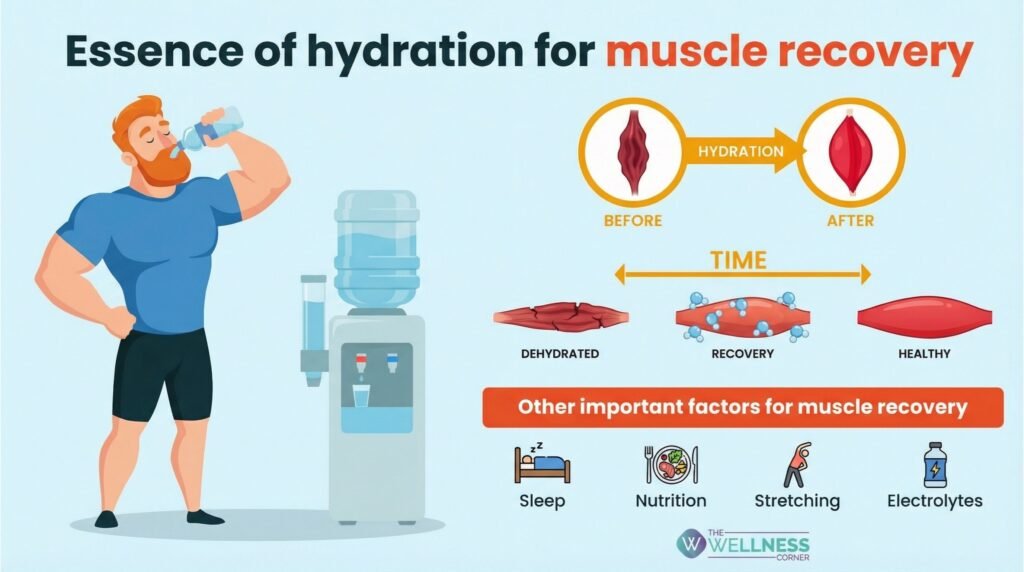
Image: Growth hormone release during sleep drives muscle repair and tissue regeneration
Glymphatic System Activation
One of the most significant recent discoveries in sleep science is the glymphatic system—a waste clearance system in the brain that becomes 10-20 times more active during deep sleep [NIH study on the glymphatic system and brain cleansing]. This system flushes out metabolic waste products including beta-amyloid and inflammatory cytokines that can impair recovery and performance.
For athletes, this brain-cleansing process is crucial because it:
- Reduces systemic inflammation that can delay muscle recovery
- Clears neurotoxins that impair coordination and reaction time
- Supports cognitive recovery from training-related mental fatigue
Immune System Fortification
Deep sleep triggers the release of cytokines, proteins that target infection and inflammation. Your immune system performs most of its maintenance during sleep [Sleep Foundation on immunity and sleep], producing antibodies and immune cells . Given that intense training temporarily suppresses immune function, adequate sleep is your primary defense against illness that could interrupt your training schedule.
ATP Restoration
Adenosine triphosphate (ATP)—your cells’ energy currency, is replenished during deep sleep. Research suggests that ATP levels surge during slow-wave sleep, restoring the cellular energy stores depleted during training . This isn’t just about feeling energized; it’s about having the cellular fuel necessary for protein synthesis and tissue repair.
Injury Prevention
Sleep deprivation significantly increases injury risk. A systematic review published in 2025 found that sleep loss impairs maximal voluntary contractions and alters muscle strength patterns, particularly affecting knee extensors . Additionally, poor sleep reduces coordination, reaction time, and proprioception—making technical movements more dangerous.
Optimal Sleep Strategies for Maximum Muscle Growth

Image: Creating the ideal sleep environment is essential for athletic recovery
Duration Guidelines
While individual needs vary, research provides clear guidance for athletes:
Minimum Effective Dose: A 2024 study in Sleep Science found that reducing sleep by just 1-2 hours below the recommended 7 hours [National Sleep Foundation’s athletic performance guidelines] impaired resistance training adaptations over a 5-week period . Participants sleeping 6 hours showed significantly less improvement in muscle strength and arm circumference compared to those sleeping 7+ hours.
Optimal Range: Most athletes require 8-10 hours of sleep per night to support recovery and training adaptations . This exceeds general population recommendations because:
- Training increases sleep need due to greater tissue damage requiring repair
- High training volumes elevate stress hormones that require longer sleep to normalize
- Athletic performance demands peak cognitive function, which requires adequate REM sleep
Sleep Hygiene Protocol for Athletes
Based on research from the NIH and sports performance literature, here are evidence-based sleep optimization strategies :
Environmental Optimization:
- Temperature: Keep your bedroom between 60-67°F (15-19°C) [Cleveland Clinic on optimal bedroom temperature]. Core body temperature naturally drops during sleep, and a cool environment facilitates this process
- Darkness: Use blackout curtains or an eye mask. Light exposure suppresses melatonin production, delaying sleep onset and reducing deep sleep quality
- Silence: Use white noise machines or earplugs to block disruptive sounds that can fragment sleep cycles
- Mattress Quality: Replace mattresses every 8-10 years; old mattresses can cause micro-awakenings that disrupt deep sleep
Behavioral Strategies:
- Consistent Schedule: Maintain the same sleep and wake times daily, including weekends. This stabilizes your circadian rhythm and improves sleep architecture
- Pre-Sleep Routine: Engage in relaxing activities 60 minutes before bed, such as stretching, foam rolling, meditation, or reading. Avoid screens or use blue-light blocking glasses [Harvard Health on blue light and sleep]
- Caffeine Curfew: Stop caffeine consumption 6 hours before bedtime. Caffeine has a half-life of approximately 6 hours and can significantly reduce deep sleep even if you fall asleep easily
- Training Timing: Avoid high-intensity training within 3 hours of bedtime, as elevated core temperature and cortisol can delay sleep onset
Nutritional Support:
- Pre-Sleep Protein: Consume 30-40g of casein protein 1-2 hours before bed [International Society of Sports Nutrition position stand on protein timing]. Casein digests slowly, providing amino acids throughout the night to support muscle protein synthesis
- Carbohydrate Timing: Higher carbohydrate meals at dinner may improve sleep quality by increasing tryptophan availability
- Hydration Management: Reduce fluid intake 2 hours before bed to minimize nighttime bathroom trips, while ensuring adequate hydration during the day
Strategic Napping
For athletes with training schedules that disrupt nighttime sleep, strategic napping can help:
- Duration: Keep naps to 20-30 minutes to avoid sleep inertia (grogginess) and nighttime sleep disruption
- Timing: Nap before 3 PM to avoid interfering with nighttime sleep architecture
- Post-Training: A brief nap after morning training can enhance recovery without compromising nighttime sleep quality
Sleep Like a Pro: Professional athletes prioritize sleep architecture. Upgrade your recovery with clinically-proven sleep supplements including magnesium glycinate, tart cherry extract, and slow-digesting casein protein for overnight muscle repair.
Advanced Recovery: Chrononutrition and Sleep Timing
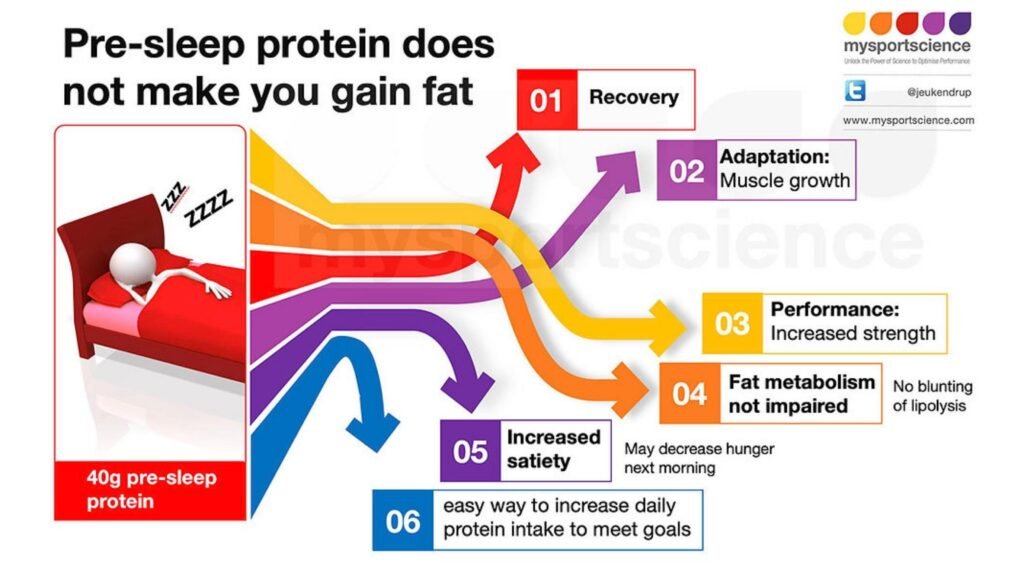
Image: Pre-sleep protein intake supports overnight muscle protein synthesis
The Chrono-Adaptive Framework
Recent research suggests that aligning your training and nutrition with your circadian rhythms can enhance muscle recovery. The “Chrono-Adaptive Framework” proposes [research on circadian rhythms and exercise performance]:
Morning Training (6-10 AM):
- Reinforces central circadian rhythms
- Optimizes hormonal profiles for the day
- May improve sleep quality the following night
- Best for general fitness and endurance adaptations
Afternoon/Evening Training (4-7 PM):
- Aligns with peak muscle clock function
- Maximizes mTORC1 responsiveness
- Optimizes strength and power output
- Ensure 2-3 hours between training and bedtime to allow core temperature to drop
Sleep-First Recovery Supplements
While whole foods should be your priority, certain supplements may support sleep quality:
Magnesium Glycinate: 200-400mg before bed [Office of Dietary Supplements on magnesium]. Magnesium supports muscle relaxation and GABA function, promoting deeper sleep
Tart Cherry Juice: Naturally contains melatonin and anti-inflammatory compounds that may enhance sleep quality and recovery
Glycine: 3g before bed may improve sleep quality and reduce core body temperature, facilitating sleep onset
Melatonin: 0.3-1mg for circadian phase adjustment (travel, shift work), but avoid chronic high-dose use which can disrupt natural production
Optimize Your Sleep Environment: Temperature, darkness, and comfort matter. Invest in blackout curtains, white noise machines, and cooling mattress pads that create the perfect conditions for deep sleep and maximum growth hormone release.
👉 Shop Sleep Environment Gear
Measuring and Monitoring Sleep Quality
Wearable Technology
Modern fitness trackers and smartwatches can provide valuable insights into:
- Sleep Stages: Time spent in light, deep, and REM sleep
- Sleep Efficiency: Percentage of time in bed actually spent sleeping
- Heart Rate Variability (HRV) [Whoop’s guide to HRV and recovery]: An indicator of recovery status and autonomic nervous system balance
- Resting Heart Rate: Elevated RHR can indicate insufficient recovery
Best fitness trackers for athletes reviewed: [Tech Meets Muscle: The Fitness Future Is Here]
Subjective Markers
Don’t ignore subjective assessments:
- Morning Readiness: Do you wake feeling refreshed or groggy?
- Training Performance: Are your usual weights feeling heavier than normal?
- Mood and Motivation: Sleep deprivation often manifests as irritability and reduced training motivation before physical symptoms appear
Recovery Is A Science: Stop guessing about your readiness. Access comprehensive sleep analysis tools and recovery monitoring systems that integrate with your training program to maximize every workout.
👉 Explore Recovery Tech
Conclusion: Sleep as a Performance Enhancer
The evidence is unequivocal: sleep is not a passive state but an active recovery process essential for muscle growth. The 18% reduction in muscle protein synthesis from just one night of sleep deprivation demonstrates that sleep quality directly impacts your body’s ability to utilize training and nutrition for muscle building .
For athletes and fitness enthusiasts, optimizing sleep should be treated with the same seriousness as training and nutrition. The strategies outlined here, environmental control, consistent scheduling, pre-sleep nutrition, and circadian alignment, provide a roadmap for maximizing your anabolic potential overnight.
Remember: you don’t grow in the gym. You grow during recovery, and sleep is the foundation of that recovery. By prioritizing 8-10 hours of quality sleep, creating an optimal sleep environment, and respecting your circadian rhythms, you’re not just resting, you’re actively building muscle, enhancing performance, and preventing injury.
Tonight, instead of scrolling through social media or watching one more episode, prioritize your sleep. Your muscles will thank you with increased strength, faster recovery, and continued progress toward your fitness goals.
Key Takeaways:
- Sleep deprivation reduces muscle protein synthesis by up to 18% even after just one night
- Deep sleep (Stage 3) releases growth hormone essential for muscle repair
- Athletes need 8-10 hours of sleep for optimal recovery and performance
- Sleep hygiene, including temperature control, darkness, and consistent schedules—significantly impacts sleep quality
- Pre-sleep protein and circadian-aligned training can enhance overnight recovery
Don’t Lose Another Night of Gains: Every night of poor sleep costs you muscle. Start your sleep optimization protocol today with our curated selection of athlete-approved sleep products—from supplements to smart bedroom tech.
👉 Ready to maximize your gains? Start by optimizing your sleep tonight.



[…] Want the Full Breakdown?Discover the science-backed strategy behind better sleep and faster muscle recovery on the Fitsola blog.👉 Read the Full Article on Fitsola […]
[…] 👉How Sleep Affects Muscle Recovery […]